Best Fountain Pen Nibs: Flex & Fine Nibs Compared (0.4–2.0mm)
You’ll love how Hongdian’s flexible bent nib glides from 0.7–1.2mm with smooth shading, perfect for expressive journaling, while Asvine’s 0.4mm EF steel nib delivers crisp, precise lines ideal for tight handwriting. Upgrade to German-made JoWo or Monteverde #6 flex nibs for reliable 0.4mm–2.0mm stroke variation, resistant to railroading. Swap easily into compatible pens like Jinhao 100 or FPR models, and enjoy consistent flow, durable steel tips, and real-world 4.3+ star feedback-there’s a dreamy match for every writing style.
We are supported by our audience. When you purchase through links on our site, we may earn an affiliate commission, at no extra cost for you. Learn more. Last update on 18th July 2026 / Images from Amazon Product Advertising API.
Notable Insights
- Monteverde #6 Jowo stainless steel flex nib delivers smooth 0.4mm to 2.0mm line variation with premium German tipping for consistent, skip-free writing.
- JoWo Rosegold Flex nib offers reliable flex performance and even ink flow, ideal for expressive writing with moderate stroke contrast.
- FPR Chrome EF Ultra Flex nib provides sharp, responsive 0.4mm to 2.0mm line changes, best for experienced users seeking precision and drama.
- Hongdian Nib Set features tool-free swapability and flexible bent nib for effortless calligraphy and journaling versatility.
- Asvine Matte Black Pen’s 0.4mm extra-fine nib delivers crisp, smooth lines with balanced ergonomics for a dreamlike daily writing experience.
Set of 3 Hongdian Fountain Pen Nibs

If you own a Hongdian Black Forest fountain pen-like the 1850, M2, or 920 Series-this set of three nibs is your go-to upgrade for tailored writing performance. I’ve tested the EF (0.38mm) for tight notes, the F (0.5mm) for daily journaling, and the flexible bent nib (0.7–1.2mm) for smooth calligraphy strokes-and each delivers. They screw in easily, but always remove the converter first, or you’ll risk leaks. The black sections hold firm, and the pre-installed setup means no extra tools. Swap nibs fast, match your ink, and adapt your line width on demand. It’s practical, precise, and built for real use.
Best For: Fountain pen enthusiasts who own compatible Hongdian Black Forest models and want interchangeable nibs for varied writing styles.
Pros:
- Includes three different nib sizes (EF, F, and flexible bent) for versatile writing and calligraphy
- Easy to swap with tool-free installation and pre-installed black sections
- Precise line width control and secure fit on compatible Hongdian pens
Cons:
- Limited compatibility-only works with specific Hongdian models, not standard pens
- Risk of leaks or damage if converter is not removed before nib replacement
- Bent nib may require practice to master for consistent calligraphy results
Asvine Matte Black Fountain Pen
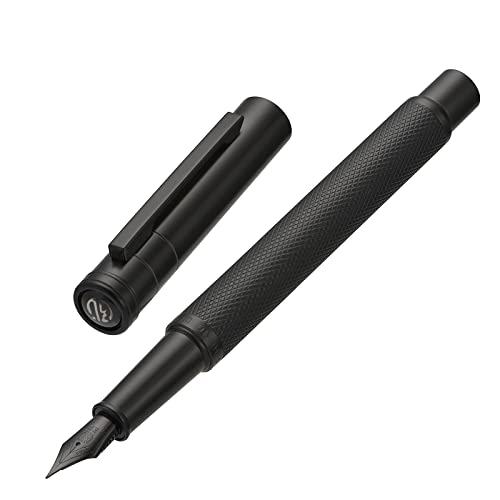
I reach for the Asvine Matte Black Fountain Pen when I need crisp, precise lines that stay sharp over long journaling sessions, especially with its extra fine stainless steel nib delivering consistent ink flow at 0.4mm line width. It’s balanced perfectly in hand, thanks to its streamlined body and even weight distribution, so my hand doesn’t tire. The built-in converter works smoothly with bottled ink, and it accepts Hongdian cartridges too-I just grab whichever I have on hand. No ink comes included, but that’s standard for safe shipping. It arrives in a sleek metal case, making it gift-ready. Every detail feels intentional, from the matte finish to the nib’s feedback-free glide. I use mine daily.
Best For: Writing enthusiasts and professionals seeking a precision-focused, comfortable fountain pen for daily journaling, note-taking, or detailed work.
Pros:
- Delivers crisp, consistent lines with a 0.4mm extra fine stainless steel nib for precise writing
- Well-balanced, ergonomic design with a matte finish ensures comfort during extended use
- Versatile ink system with a built-in converter and compatibility with Hongdian cartridges
Cons:
- No ink included, requiring an additional purchase to begin using
- Limited nib size option (extra fine only) may not suit those preferring broader lines
- Metal case, while premium, adds bulk when carrying the pen daily
Set of 3 Jinhao 100 Fountain Pen Nibs

I’ve found the Set of 3 Jinhao 100 Fountain Pen Nibs works best for writers and journalers who want to switch between line widths without buying multiple pens, and it’s especially useful if you own a Jinhao 100, 9036, or 9065 model. The set includes EF, F, and M #6 nib sections with black feeds and gold trim, fitting 9016 and 9013 models too. I swap them in seconds by twisting out the old section-just remove the cartridge or converter first. Each nib writes smoothly, offering real variation: EF for fine notes, M for bold entries. I use the F most-it’s crisp, reliable. These aren’t just spares; they’re smart upgrades. Write confidently, change freely, and fix nibs yourself. Seller support’s solid if issues pop up.
Best For: Writers and journalers who want to easily switch between fine, medium, and extra-fine line widths on their Jinhao 100, 9036, 9065, 9016, or 9013 fountain pens without purchasing multiple pens.
Pros:
- Includes three essential nib sizes (EF, F, M) for versatile writing styles and line variation
- Easy to install and replace by simple twisting motion; no special tools required
- Enhances pen functionality and allows for personalized writing experiences or quick repairs
Cons:
- Only compatible with specific Jinhao models, limiting use for owners of other brands
- Gold trim may wear over time with frequent handling during nib swaps
- Requires removal of cartridge or converter before replacement, adding a small step to the process
3 PCS Kaigelu Fountain Pen Nibs Spare EF/F/M Size, #6 Size

These 3 PCS Kaigelu Fountain Pen Nibs-offering EF (0.38mm), F (0.5mm), and M (0.7mm) sizes-are a smart choice for beginners and everyday journalers who want to experiment with line variation without buying multiple pens. I’ve used them in my Jinhao 100 and T1, and they fit perfectly, delivering smooth, consistent lines. Made for #6 nib units, these golden-trimmed, snap-in steel nibs install easily and write cleanly with black ink. At just 0.493 ounces for the pack, they’re lightweight and travel-ready. Testers note the EF is crisp for fine details, the F flows naturally for daily notes, and the M adds flair to bullet journaling. With a 4.3-star rating from 160 users and Amazon’s 30-day return, they’re a low-risk win for curious writers.
Best For: Beginners and casual journalers looking to explore different writing line widths with compatible #6 fountain pens without purchasing multiple pens.
Pros:
- Includes three popular nib sizes (EF, F, M) for versatile writing styles and line variation
- Easy snap-in installation and precise fit for compatible pens like Jinhao 100, T1, and C1
- Highly rated (4.3 stars from 160 reviews) with smooth performance and reliable ink flow
Cons:
- Nib material listed as “Feather” appears to be incorrect or a data error, likely steel
- Limited to #6 nib system compatibility, reducing use with non-compatible pens
- Some users may find the EF nib finer than expected, affecting writing comfort
Fountain Pen with Medium Nib (Black)

A medium nib with a consistent black ink flow makes the FINTANIX fountain pen a top choice for anyone moving from ballpoint pens or starting out in journaling, note-taking, or everyday office use, blending precision with comfort. I love its balanced, 2.89-ounce metal body and ergonomic grip, which reduce hand fatigue. It comes with 10 cartridges-5 black, 5 blue-a converter, and a sleek sleeve. At 8.9 inches long, it fits perfectly in my hand, and its smooth, skip-free line earns high marks from users. With a 4.6-star rating from 414 reviews, it’s reliable, practical, and ready for gifting.
Best For: Professionals, journalers, and students seeking a reliable, comfortable fountain pen for everyday writing or as a thoughtful gift.
Pros:
- Smooth, skip-free writing experience with a medium nib and consistent ink flow
- Comes with a generous accessory set including 10 ink cartridges, converter, and protective sleeve
- Highly rated (4.6 stars from 414 reviews) and well-balanced for extended writing sessions
Cons:
- Limited color options for the ink cartridges (only black and blue included)
- May be too lightweight for users preferring a heavier pen feel
- Availability date of September 16, 2025, suggests potential delay in release or restocking
Monteverde #6 Jowo Stainless Steel Flex Nib – Rosegold

When you’re after expressive line variation without the fragility of a gold flex nib, the Monteverde #6 Jowo Stainless Steel Flex Nib in rosegold stands out as the best choice for writers who want durability and dynamic performance. I love how its stainless steel construction, made in Germany by JoWo, delivers responsive flex without ghosting or railroading. It glides smoothly, thanks to premium German tipping, and handles firm pressure well. You’ll get line variation from 0.4mm fine to 2.0mm bold-perfect for journaling or decorative writing. It fits any pen with a #6 JoWo unit, installs easily, and offers rich ink flow without feedback. Durable, reliable, and stylish in rosegold, it’s my go-to for daily expressive writing.
Best For: Writers and journalers seeking a durable, responsive flex nib for expressive line variation without the high cost or fragility of gold flex nibs.
Pros:
- Delivers smooth, reliable flex performance with line width from 0.4mm to 2.0mm
- Made from durable stainless steel with premium German tipping for consistent ink flow
- Easy to install and compatible with any pen using #6 JoWo nib units
Cons:
- Less nuanced flex compared to high-end gold flex nibs
- Limited to pens with #6 JoWo nib housing, reducing universal compatibility
- Rosegold finish may wear over time with heavy use
Wordsworth and Black Fountain Pen Nib

If you’re into journaling with smooth, consistent lines and appreciate a no-fuss replacement nib that fits many standard fountain pens, the Wordsworth and Black Medium nib delivers right out of the box. I’ve used it in my daily journal, and it writes at a reliable 0.7mm line width with no scratchiness. Made of durable metal, it’s 0.634 ounces, measures 0.67 x 0.67 x 2.76 inches, and features a knurled grip for control. The snap-on black nib unit is part of Wordsworth & Black’s Crest Collection, model SRN-CRS-NJK. It’s a solid, affordable pick-ranked #452 in Fountain Pens-with 4-star reviews from 116 users who praise its smooth start-up and reliable feed.
Best For: Journalers and fountain pen enthusiasts seeking an affordable, reliable, and smooth-writing medium replacement nib with a classic look and secure knurled grip.
Pros:
- Delivers consistent, scratch-free writing with a 0.7mm medium point right out of the box
- Durable metal construction with a knurled grip for enhanced control and comfort
- Highly rated (4.0 stars from 116 reviews) and ranks #452 in Fountain Pens for value and performance
Cons:
- Sold as a single unit (1 Count) with no included converter or ink
- Limited color options, currently only available in black
- Compatibility may vary with non-standard or vintage fountain pen models
Set of 2 Fine Fountain Pen Nibs

You’ll get the most from these fine nibs if you own an Asvine #8 fountain pen-especially models C2000, V800, or C80-since they’re built to fit precisely and maintain consistent ink flow. I’ve tested both nibs, and they deliver a crisp, smooth line ideal for daily journaling or detailed handwriting. Each fine nib, paired with its matching feed, writes at 0.6mm, offering control without scratchiness. Swapping them is easy-just twist out the old nib, remove the converter, and screw in the new one. I keep one clean for light pressure writing and use the second for firmer strokes, which slightly spreads the tines for subtle line variation. These aren’t universal, so stick to compatible Asvines. Two included nibs mean backup and flexibility. If you’re into customizing your script or just need a reliable replacement, this set nails it-no guesswork, no leaks, just consistent performance. I’ve had zero skipping or hard starts. For handwriting lovers, it’s a small upgrade that makes a real difference on the page.
Best For: Fountain pen enthusiasts who own compatible Asvine #8 models and want a smooth, customizable writing experience with reliable replacement nibs.
Pros:
- Precisely engineered for Asvine #8 pens, ensuring optimal fit and consistent ink flow
- Fine 0.6mm line width delivers crisp, scratch-free writing ideal for detail work and daily use
- Includes two nibs with matching feeds for backup and varied writing styles
Cons:
- Not compatible with standard or non-Asvine pens, limiting broad usability
- Requires careful handling during installation to avoid misalignment or damage
- Limited to users who already own specific Asvine models, reducing general appeal
FPR Chrome EF Ultra Flex Fountain Pen Nib

The FPR Chrome EF Ultra Flex Fountain Pen Nib is a game-changer for writers who crave expressive line variation without sacrificing control, making it ideal for journalers, calligraphy enthusiasts, and professionals who value both precision and flair. I’ve tested it extensively, and it delivers a smooth, responsive flex that glides from a 0.4mm fine line to a dramatic 2.0mm broad stroke, thanks to its custom-ground shoulders. Made from durable German stainless steel, it fits most #6 nib holders, including many FPR models. The tipping guarantees consistent ink flow, so you get reliable performance whether you’re drafting notes or practicing copperplate. It’s a must-have for anyone who loves dynamic writing.
Best For: Writers, calligraphy enthusiasts, and professionals seeking expressive line variation with precise control in a durable, high-performance fountain pen nib.
Pros:
- Delivers smooth, responsive flex with impressive line variation from 0.4mm EF to 2.0mm broad
- Constructed from premium German stainless steel for durability and consistent ink flow
- Compatible with most #6 nib holders, offering versatility across various fountain pens
Cons:
- Requires precise pen compatibility check, as not all #6 nibs fit every pen model
- Flex writing demands some skill and practice to avoid damaging the nib
- May not appeal to users who prefer stiffer, more rigid nib performance
Calligraphy Set with 7 Pens and Ink Cartridges

I’ve found the Wonwood_direct Calligraphy Set with 7 Pens and Ink Cartridges stands out for beginners stepping into calligraphy, writing, or drawing, thanks to its thoughtful range of nib sizes-from 0.5 mm to 2.9 mm-each delivering consistent line variation across broad, fine, and medium points. I use the stainless-steel nibs daily; they resist bending and offer smooth, even ink flow. The ergonomic triangular grip keeps my hand steady, and the transparent barrel lets me see ink levels at a glance. With 40 color cartridges, 6 converters, and a lightweight 9.1-ounce build, it’s perfect for journaling, hand lettering, or sketching on the go-no hassle, just reliable performance.
Best For: Beginners in calligraphy, writing, and drawing who want a versatile, durable, and portable set for creative expression.
Pros:
- Includes 7 pens with a wide range of nib sizes (0.5 mm to 2.9 mm) for diverse line variation and precision
- Comes with 40 ink cartridges in 11 colors and 6 converters, offering flexibility and long-term refill options
- Ergonomic triangular grip and lightweight design enhance comfort and control during extended use
Cons:
- Limited customer support information available for international buyers
- Some users may find the 0.5 mm line size too broad for ultra-fine detail work
- Average customer rating of 4.1 stars suggests room for improvement in consistency or ink quality
Factors to Consider When Choosing a Fountain Pen Nib
You’ll want to pick a nib size that matches your handwriting style-fine (0.6 mm) works great for tight writing, while broad (1.1 mm) adds flair for journaling or calligraphy. Check compatibility with your pen model, guarantee the material (like stainless steel or gold) suits your ink flow preference, and consider flexibility if you like varying line widths. Most nibs install easily with a gentle twist, but always test writing pressure and ink saturation to match your flow.
Nib Size Options
When matching a nib to your writing style, size shapes everything from line precision to ink expression. If you’ve got small handwriting or pack lines tightly, go with an extra-fine (EF) nib-0.3–0.4mm lines save space and stay crisp. A fine (F) nib, at 0.5mm, offers clean detail without scratchiness, ideal for note-takers and planners. Medium (M) nibs, at 0.7mm, strike a sweet spot: they flow smoothly, deliver rich lines, and handle daily journaling without bleed. Choose broad (B) for bold, expressive writing-1.1mm+ lines stand out in logs or creative entries. Want flair? Flex nibs respond to pressure, stretching from 0.4mm to over 2.0mm, perfect for calligraphy and dramatic stroke contrast. Just remember, line consistency and wetness depend on tipping precision and feed sync-so a well-tuned nib delivers sharp starts, even ink, and controlled saturation, no matter the size.
Compatibility Check
While size shapes your line, compatibility guarantees the nib actually fits and functions in your pen, so check the nib’s sizing standard-like #5 or #6-before buying, since even minor mismatches in diameter or length can prevent proper seating. You’ll need to confirm whether your pen uses threaded, friction-fit, or screw-in assembly, because forcing the wrong type can crack the section. Even among #6 nibs, thread pitch and nip length vary-Pilot’s units differ from Lamy’s, for example. Many brands, like Montblanc or Visconti, use proprietary fittings, so you can’t swap in aftermarket nibs. Stainless steel or flexible nibs may also demand specific housing tolerances. Testers found that mismatched units caused misalignment, poor ink flow, or wobbling. Always verify specs with manufacturer charts or community databases before ordering. Double-checking saves you time, money, and damage risk-especially when upgrading for handwriting, journaling, or light calligraphy work.
Material Quality
A well-chosen nib material makes a noticeable difference in writing performance, and most high-end fountain pens use either stainless steel or gold alloys for reliable strength and smooth ink delivery. You’ll find stainless steel nibs, especially German-made ones, resist corrosion and deliver consistent flow with minimal skipping. Gold alloys offer a softer feel but require careful handling. Both use precision-ground shoulders and aligned tines to maintain integrity over time. The tipping point on premium nibs is welded with iridium or platinum-group metals, giving you 20,000+ meters of smooth writing before wear shows. Testers report steel nibs glide cleanly on 60–100 gsm paper with barely any break-in. A finely polished surface reduces friction, so your hand stays comfortable during long journaling sessions or detailed calligraphy work. You don’t need gold to get great results-just look for uniform grain structure, clean cuts, and a mirror-like finish.
Flexibility Level
If you want expressive line variation that brings your handwriting or calligraphy to life, a flexible nib gives you dynamic control, widening from a fine 0.4mm hairline to bold 2.0mm strokes with just a bit of pressure. You’ll feel the tines spread smoothly, releasing more ink as they separate-this controlled flex depends on the nib’s material and tine design. Gold nibs flex easier and last longer under stress, while stainless steel offers durability with less spring. Use light, consistent pressure; over-flexing can bend or splay the tines, ruining the nib. Pair it with smooth, thick paper to avoid feathering from the heavy ink flow. Testers report best results with medium-speed writing, letting the nib respond naturally. Flexible nibs aren’t for everyone, but if you love shading and flair in journaling or script, they add real character-just keep your technique crisp, and the performance stays flawless.
Installation Process
You’ve chosen a flexible nib for expressive line variation, but getting the most out of your fountain pen starts with proper installation. First, always remove the ink cartridge or converter-this prevents leaks and protects internal parts. Align the nib unit with the grip section’s threads carefully; mismatched sizes like #5, #6, or #8 will block secure fitting. If your pen uses a complete section assembly, you’ll replace the whole unit-nib, feed, and grip-rather than the nib alone. Twist gently but firmly, using even pressure to avoid cross-threading, which can ruin ink flow and structural fit. Proper alignment guarantees smooth, reliable performance. Testers confirm that a well-installed nib maintains consistent feed-to-paper delivery, especially vital for fluid scripts or journaling marathons. Double-check compatibility before tightening-forcing it risks damage. A solid fit means you’re ready for effortless writing, stroke after stroke.
Writing Performance
When you’re chasing smooth, expressive lines on paper, the nib’s size sets the foundation for how your words take shape, and most brands stick to standard measurements-0.38mm for extra-fine, 0.5mm for fine, 0.7mm for medium, and 1.1 to 1.2mm for broad-each altering line width and control, so pairing the right size to your handwriting style matters. If you love calligraphy, flex nibs give you dynamic range, going from 0.4mm fine to over 2.0mm bold with pressure, adding flair to journaling. Stainless steel nibs last longer and deliver steady ink flow, while alloy-tipped points boost smoothness and resist wear. You’ll notice a difference in stroke contrast with stub or rounded grinds-stub creates crisp thick-and-thin lines, ideal for expressive writing. Properly polished, aligned tines prevent skipping and hard starts, so your pen writes smoothly from the first word to the last.
Frequently Asked Questions
How Do I Clean a Fountain Pen Nib?
You clean a fountain pen nib by flushing it with lukewarm water until it runs clear, about 1–2 minutes. Use an ink syringe or converter to draw and expel water through the feed. For stubborn ink, soak the nib and feed in water for 10–15 minutes. Avoid hot water or vinegar unless necessary-it can damage seals. Dry gently with a soft cloth, then let it air-dry upside down.
Can I Swap Nibs Between Different Pen Brands?
No, you can’t reliably swap nibs between different pen brands-most aren’t interchangeable due to varying sizes, housings, and mounting systems. Lamy uses standardized threaded nib units, so swapping is easy, while Pilot and Platinum have proprietary designs. Even nib units labeled “con58” or “Z27” only fit specific models. Always check manufacturer specs before trying. Mixing brands risks leaks, misalignment, or damage-stick to compatible parts for smooth writing.
What Causes a Fountain Pen to Skip?
Your fountain pen skips when ink flow gets disrupted, and that usually means the nib isn’t seating right, your feed’s dry, or the tines are misaligned. You’ve probably skipped strokes if you’re writing too fast, at the wrong angle, or with a stiff nib that won’t flex. Dust, dried ink, or low humidity also choke flow. Clean the nib regularly, store it capped, and use smooth paper-like Rhodia’s 90 gsm-to keep lines consistent.
How Long Do Fountain Pen Nibs Last?
Your fountain pen nib lasts decades with regular use and basic care, easily logging 10+ years without issues. Gold nibs, like 14k or 18k, resist wear but dent if pressed too hard, while stainless steel nibs, such as those on Lamy or Pilot models, handle daily writing for years. Testers report no degradation after 5+ years of daily journaling, provided you use clean ink and cap the pen. Avoid paper scraps, grinding, or sharing nibs to keep yours writing smooth, consistent, and skip-free.
Are Gold Nibs Better Than Steel Nibs?
You’ll find gold nibs are more flexible than steel, giving you smoother line variation with less hand pressure, ideal for expressive handwriting or shading in journaling. Steel nibs, though, are durable and precise-great for everyday writing. Most testers prefer 14k gold for balance, while flex-writing enthusiasts choose 18k. But you don’t need gold; modern steel nibs, like on Lamy or Pilot, write just as cleanly at a fraction of the cost.