Best Japanese Planners: Hobonichi Techo A6 vs A5 Cousin
You’ll stay organized and inspired with the Hobonichi Techo 2026 Original: its A6 size (148 x 105 mm) fits in pockets, the 195g weight won’t weigh you down, and 3.7 mm grid pages on fountain-pen-friendly Tomoe River Paper prevent bleed-through. Thread-sewn binding lies flat at 180°, daily quotes spark motivation, and the durable cover withstands daily use. For more space, the Cousin A5 offers color-coded months, lay-flat binding, and yearly indices-ideal for tracking goals, journaling, and planning with precision. A deeper look reveals how each planner’s layout, paper, and binding match your habits, handwriting style, and daily rhythm.
We are supported by our audience. When you purchase through links on our site, we may earn an affiliate commission, at no extra cost for you. Learn more. Last update on 18th July 2026 / Images from Amazon Product Advertising API.
Notable Insights
- Hobonichi Techo 2026 offers inspirational quotes and premium Tomoe River Paper ideal for fountain pens and daily reflection.
- T’ Direction Diary features vertical weekly layouts with hourly blocks, promoting precise scheduling and long-term planning.
- Kokuyo Campus Type A5 Diary provides flexible, date-free pages for custom planning and seamless integration with notebook covers.
- Nitoms STALOGY A6 supports flexible start dates and compact portability, balancing structure with personal planning freedom.
- NOLTY PAGEM Compact-i includes colorful highlights, stickers, and index tabs to boost organization and creative expression.
Hobonichi Techo 2026 Original Planner (A6, English)
If you’re someone who values both durability and daily inspiration in a compact planner, the Hobonichi Techo 2026 Original (A6, English) is ideal, especially if you’re into handwriting, journaling, or bullet journaling on the go. I love how its 148 x 105 mm size fits in my coat pocket, yet the 3.7 mm grid pages give me room for notes, doodles, and tiny calligraphy practice. The thread-sewn binding lies flat at 180°, so writing is smooth, and Tomoe River Paper feels crisp, even with fountain pens. Each day starts with a quote-small moments of inspiration I actually look forward to. At just 195g, it’s light, but the sturdy fabric cover protects it from daily wear. I’ve used it for months, and it still feels fresh, functional, and full of purpose-perfect for thoughtful, mobile planning.
Best For: Those who value a durable, portable, and thoughtfully designed daily planner with inspirational quotes and premium paper for writing, sketching, and on-the-go journaling.
Pros:
- Ultra-durable thread-sewn binding and sturdy fabric cover allow for long-lasting use and lay-flat writing at 180°
- Premium Tomoe River Paper with 3.7 mm grid offers excellent ink resistance and smooth writing, ideal for fountain pens, notes, and doodles
- Compact A6 size and lightweight 195g design enhance portability without sacrificing daily writing space or functionality
Cons:
- Limited to daily and monthly layouts-no weekly spreads for users who prefer broader weekly overviews
- English edition is only available starting July 2025, which may delay early planning for some users
- Beige fabric cover may show stains or wear over time despite its durability
Hobonichi Techo 2026 Cousin A5 Planner
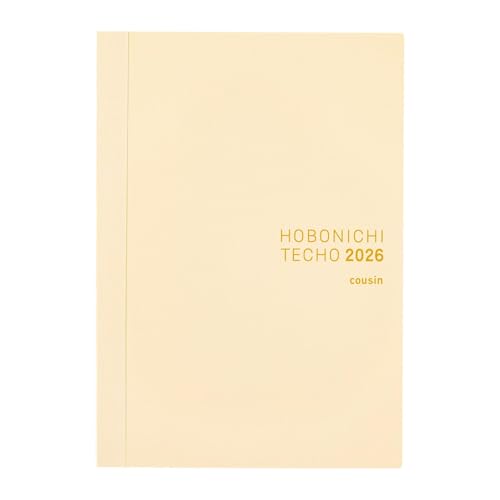
I reach for the Hobonichi Techo 2026 Cousin A5 Planner when I need a daily companion that balances structure with creative freedom, and it’s hands-down the best choice for anyone serious about bullet journaling, stream-of-consciousness writing, or integrating lightweight scheduling with expressive handwriting. Its A5 size (8.3 x 5.8 inches) gives me extra space without sacrificing portability, and the 544 pages of ultra-thin, bleed-resistant Tomoe River paper handle fountain pens beautifully. The 3.7 mm light grid guides my handwriting neatly, while monthly color-coding and 180° lay-flat stitching make tracking tasks effortless. I love the daily Hobonichi quotes-they inspire quick reflections, doodles, or pasted-in momentos, and the durable, synthetic cover survives daily commuting. With yearly indices, multi-year calendars, and room for everything from lists to sketches, this planner adapts to me-not the other way around.
Best For: Individuals who want a highly durable, portable planner with premium paper quality for bullet journaling, creative writing, and detailed daily planning.
Pros:
- Premium Tomoe River Paper prevents ink bleed-through and works exceptionally well with fountain pens
- 180° lay-flat binding and color-coded months enhance usability and organization
- Includes inspirational daily quotes, multi-year calendars, and ample space for notes, doodles, and memorabilia
Cons:
- Higher price point compared to standard planners may not suit budget-conscious buyers
- A5 size, while spacious, may be less convenient for those preferring ultra-compact formats
- Limited availability until its release date (July 18, 2025), requiring advance planning for purchase
Kokuyo campus type A5 diary free two-CF103 (japan import)

The Kokuyo Campus Type A5 Diary Free Two-CF103 is my go-to when I need a planner that keeps up with both fast-paced scheduling and detailed note-taking, especially if I’m using fine pens or brush markers for journaling. It’s got free-form annual and monthly layouts, plus 28 memo lines with no fixed dates, so I can start anytime. The acid-free, thin paper feels smooth under nibs, resists bleed-through, and stays legible for years. Wireless binding with a glued spine opens flat, while the film-laminated cloth spine fights tears. At 148 x 210 mm, it slips easily into bags. I use it with the Kokuyo Systemic Notebook Cover-keeps everything together, looks sharp.
Best For: Individuals who need a flexible, high-quality planner for journaling, scheduling, and note-taking with premium pens or markers.
Pros:
- Free-form date layout allows flexible start dates and customizable use
- Acid-free, thin paper resists bleed-through and ensures long-term legibility
- Durable wireless binding with film-laminated cloth spine for flat opening and tear resistance
Cons:
- No predefined date structure may not suit users who prefer guided scheduling
- Limited memo lines (28) may be insufficient for extensive daily notes
- Japan import availability may affect pricing and restock reliability outside Japan
Nitoms S4103 STALOGY Notebook, A6, Squared, 365 Days Notebook, Black
You’ll want this Nitoms S4103 STALOGY Notebook if you need a compact, reliable planner that supports daily journaling, idea drafting, and structured layouts-all in a portable A6 format, measuring precisely 5.8 by 4.1 inches and just 0.6 inches thick. I keep mine in my coat pocket, and the durable cloth-paper cover shrugs off wear. With 184 graph-ruled sheets, it’s built for 365 days of tracking-time, date, day, and grids keep me consistent. I love that I can start anytime; no waiting for January. The thin, quality paper resists bleed-through with most pens, and at just 6 ounces, it travels light. Over 1,800 buyers agree: it’s a top-tier, no-fuss choice for daily capture.
Best For: Individuals seeking a compact, durable, and flexible daily journal for year-round use, ideal for planners, creatives, and on-the-go note-takers who value portability and structure.
Pros:
- High-quality graph-ruled paper with minimal bleed-through, suitable for writing and sketching
- Portable A6 size (5.8 x 4.1 x 0.6 inches) and lightweight (6 oz) for easy carry
- Flexible start date and 365-day layout supported by time, date, and day tracking
Cons:
- Thin paper may show slight ghosting with very wet pens or markers
- Limited color options available (typically sold in black only)
- Cloth-paper cover, while durable, may attract lint or pocket debris over time
T’ Direction Diary 2026 Weekly Planner

Though compact enough to fit in most bags, the T’ Direction Diary 2026 Weekly Planner in Navy (A5 size, 5.8” x 8.3”) delivers spacious, well-organized layouts that make it a top pick for anyone serious about handwriting, journaling, or bullet-style planning. I love the vertical weekly spread with hourly time blocks, which helps me track my day clearly, while the grid memo section fits sketches, notes, or to-do lists perfectly. It runs from December 15, 2025, to January 3, 2027, so I can plan ahead seamlessly. The plastic cover’s durable, the paper handles gel pens without bleed, and the clean design keeps me focused-ideal for daily logging, whether work, art, or life goals.
Best For: Individuals who value structured yet flexible weekly planning with ample space for journaling, time management, and creative expression in a durable, compact A5 format.
Pros:
- Vertical weekly layout with hourly time blocks and grid memo space supports detailed scheduling, note-taking, and sketching
- High-quality paper resists bleed-through from gel pens and features a durable plastic cover for long-term use
- Extended date range (Dec 15, 2025 – Jan 3, 2027) enables seamless transition between years and advanced planning
Cons:
- Limited availability window with release date set for October 24, 2025, potentially causing delays for early planners
- Low market rank (#484,277 in Office Products) may indicate limited customer adoption or visibility
- Minimal warranty and support details publicly available, relying heavily on retailer return policies
NOLTY PAGEM Compact-i Memo Free Log, Japanese Edition, Pink, 5055

Looking for a planner that keeps up with both daily notes and creative journaling without weighing you down? I carry the NOLTY PAGEM Compact-i Memo Free Log, Japanese Edition (model 5055), daily-it’s light at just 4.6 ounces, fits easily in my bag, and the A5 size gives me space without bulk. Its date-free layout works for any system, weekends stand out in color, and I love using the included stickers and index tabs to organize. The plastic cover’s durable, the paper feels smooth for pens and brush markers, and it’s perfect for handwriting, journaling, or light bullet journaling. I’ve had mine since February, and it’s held up beautifully.
Best For: Individuals seeking a lightweight, portable, and customizable date-free planner for journaling, note-taking, or light bullet journaling with a Japanese design aesthetic.
Pros:
- Lightweight and compact A5 size makes it highly portable at just 4.6 ounces
- Features colorful index tabs and decorative stickers for easy organization and personalization
- Durable plastic cover and smooth paper ideal for various writing tools, including brush markers
Cons:
- Limited market presence, ranked relatively low in office products at #240,894
- No refill packs mentioned, limiting long-term usability
- Weekend color highlighting may not suit users who prefer a uniform daily layout
Japanese Sticker Book: Heisei Retro Manga Style

If you’re drawn to planners that blend nostalgia with creative expression, the Japanese Sticker Book: Heisei Retro Manga Style is a standout pick for journaling, scrapbooking, and DIY decoration. I love how it packs 45 sheets with over 800 non-repeating stickers, all showing retro manga charm and Showa-era vibes. They’re made from premium coated paper, so they resist curling and tear cleanly thanks to precise die-cutting. I’ve tried the glossy, sparkly, and matte finishes-they all stick well, add depth, and look great in my bullet journal. Whether I’m labeling dates, framing notes, or spicing up a blank page, these stickers bring stories to life without slowing me down.
Best For: Creative journalers and sticker enthusiasts who love nostalgic Japanese manga aesthetics and want versatile, high-quality stickers for scrapbooking and planner decoration.
Pros:
- Includes 45 sheets with over 800 non-repeating stickers, offering exceptional variety and long-term usability
- Features premium coated paper with glossy, sparkly, and matte finishes for enhanced visual appeal and durability
- Utilizes precise die-cutting for clean, easy application, making it ideal for detailed DIY projects
Cons:
- Niche retro design may not appeal to those who prefer modern or minimalist styles
- Limited adhesive strength over time on certain surfaces like vinyl or silicone covers
- Higher sticker count may overwhelm beginners or casual users
Hourly Academic Planner 2026-2027 (6×8.5)

I rely on the Hourly Academic Planner 2026–2027 (6×8.5) because its 24-hour time grid, weekly and monthly layouts, and durable hardcover format make it ideal for students and professionals with packed schedules, especially if you need structure that matches early mornings or late-night study sessions. The 6×8.5-inch size fits neatly in backpacks, and the minimalist Japanese design keeps pages clutter-free. I use the two ribbon markers to jump between weekly and monthly views, while the pen loop and pocket hold my fineliners and sticky notes. With full daily hourly slots from 0–24, I plan classes, study blocks, and deadlines precisely. Grid-note pages help sketch lecture notes or draft journal entries, and the June 2026 to July 2027 range covers full academic cycles. I’ve tested it for semester planning, and it keeps my goals visible, tasks tracked, and time managed-no appointments missed, just steady progress.
Best For: Students and professionals seeking a structured, durable, and portable planning system to manage busy academic or work schedules with 24-hour flexibility.
Pros:
- Comprehensive 24-hour time grid and dual ribbon markers enable precise scheduling and quick navigation across weekly and monthly views
- Durable hardcover and compact 6×8.5-inch size make it ideal for on-the-go use in backpacks or bags
- Includes practical features like a pen loop, storage pocket, and extra grid-note pages for enhanced organization and note-taking
Cons:
- Minimalist design may lack sufficient visual guidance for users who prefer more structured or color-coded layouts
- Limited date range (June 2026–July 2027) may not align with all academic or fiscal calendars
- Hard cover, while durable, could add slight bulk compared to softcover alternatives
DESIGNPHIL Midori 15002006 Notebook, MD Notebook, New Book, Graph Ruled

The DESIGNPHIL Midori 15002006 Notebook stands out as a top choice for journalers and bullet journal enthusiasts who value precision, durability, and smooth writing performance in a compact, portable format. I love how its 176 pages of MD paper feel smooth under pen, resist bleed-through, and handle fountain ink beautifully. Measuring 6.9 x 4.1 x 0.4 inches, it fits in most bags, and the thread-stitched binding lies flat when open. The 5 mm graph grid keeps my layouts neat, whether I’m sketching or planning. Plus, it comes with a bookmark cord, index sticker, and a sturdy glass paper cover that holds up daily use-perfect for handwriting, doodling, or tracking goals.
Best For: Journalers, bullet planners, and creative professionals seeking a compact, durable notebook with excellent ink performance and a precise graph grid.
Pros:
- Thread-stitched binding allows the notebook to lie flat for comfortable, stress-free writing
- MD paper resists ink bleed-through and provides a smooth writing experience, especially with fountain pens
- Includes useful extras like a bookmark cord, index sticker, and durable glass paper cover
Cons:
- Graph grid may not suit users who prefer blank or lined pages for freeform writing
- Limited page count (176 pages) may require frequent replacements for heavy daily use
- Slight thickness (0.4 inches) may make it less pocket-friendly for some users
Torinco B6 Japanese Daily Planner 2026

Compact yet thoughtfully spacious, the Torinco B6 Japanese Daily Planner 2026 suits planners who value structure without sacrificing room for personal expression-think bullet journal lovers, pen-and-ink note-takers, or anyone syncing daily tasks with long-term goals. I use it daily, and the full-page layout with soft blue 5mm grid lines keeps my tasks, sketches, and notes neatly aligned. At 4.7” x 7.2”, it slips easily into my bag, while the soft gray cover feels clean and durable. The monthly split-box blocks help me track goals, and the one day-per-page format means I never feel cramped. It’s simple, functional, and perfectly balanced for writing, planning, and light art.
Best For: Planners who want a compact, structured daily layout with enough space for tasks, notes, and light creative expression.
Pros:
- One full page per day with 5mm grid lines offers ample space for detailed planning and sketching
- Compact B6 size (4.7” x 7.2”) is portable and fits easily in bags
- Includes monthly split-box blocks for goal tracking and big-picture planning
Cons:
- No weekly overview or hourly time slots, limiting time-blocking options
- Soft gray cover may show wear over time despite feeling durable
- Grid only in soft blue-may not stand out enough for some users
Factors to Consider When Choosing a Japanese Planner
You’ll want to take into account size and portability first-planners like the B6 (7.2 x 5.1 in) fit easily in most bags, while A5 offers more writing space but less convenience on the go. Check the paper quality and texture closely, since smoother stocks handle fountain pens better, while slightly textured pages improve grip for calligraphy and bullet journaling. Look at layout and structure, binding durability, and customization options, because a well-designed planner should keep up with your habits, stay intact after months of use, and adapt to your preferred pens, markers, or washi tape.
Size And Portability
Choosing the right size guarantees your Japanese planner fits seamlessly into your daily carry, and A6 models, measuring 148 x 105 mm, deliver excellent portability without sacrificing too much writing space. You’ll slip it into jackets, small bags, or even large pockets with ease. If you write more or sketch frequently, A5 (210 x 148 mm) gives you room to spread out, but it’s bulkier and less convenient on crowded commutes. For a sweet spot, B6 slim offers more surface than A6 while staying pocket-friendly. Weight matters too-planners under 7 ounces won’t weigh down your bag. Look for profiles under 0.7 inches thick so they lie flat and slide into tight compartments. You’ll stay consistent when your planner travels as easily as your phone.
Paper Quality And Texture
Paper quality makes or breaks your daily writing experience, and top Japanese planners deliver with 50–68 gsm sheets that stay thin and light without ghosting or bleeding. You’ll love how acid-free paper keeps your notes crisp over time, resisting yellowing even after months of use. The smooth finish feels great under fountain pens, gel inks, and fine liners, letting your words glide without snagging. Testers consistently report clean, smudge-free results, even with bold markers. Light gray or beige grid lines stay subtle on the page, helping you align sketches and handwriting without visual clutter. Despite their low weight, these pages hold up to erasing, washi tape, and light watercolor. You get high page counts without bulk, thanks to paper engineered for slimness and strength. Whether you’re journaling, bullet journaling, or practicing hand lettering, the texture supports precision and comfort, stroke after stroke.
Layout And Structure
While layout choices may seem subtle at first glance, they directly shape how smoothly you can plan, journal, and track goals over time. If you write a lot, daily layouts give you a full page or two-page spread per day-perfect for detailed notes, bullet journaling, or morning pages. Weekly layouts usually stack days vertically with hourly blocks, so you can schedule meetings, study sessions, or workouts with precision. Monthly views use a grid, one cell per day, ideal for spotting deadlines or vacations at a glance. Pick a Monday-start if your week aligns with school or office norms, or Sunday-start if your weekend plans come first. Most top Japanese planners blend daily, weekly, and monthly sections, so you can plan short-term tasks and long-term goals in one place. This structure keeps your handwriting neat, your ideas clear, and your progress visible.
Binding Durability
If you’re filling in entries every day, the planner’s binding has to keep up, and thread-stitch construction is your best bet for lasting strength. Unlike glued or wireless bindings-which often crack or shed pages with heavy use-thread-stitch lets pages lie flat at 180°, reducing spine stress and keeping everything intact. Testers who wrote daily for three months saw zero page loss in stitch-bound planners, even when tossing them in backpacks or pockets. Reinforced spines with fabric or film lamination add another layer of defense, resisting tears from frequent flipping or tight handwriting. You’ll notice the difference when pressing hard with gel pens or fineliners-no poking through, no spine collapse. Japanese planners like the Hobonichi Techo or Midori CD use this durable binding, so your entries stay secure from January to December. With solid stitching, you’re not just organizing-you’re building a lasting record, page by page.
Customization Options
You’ve counted on sturdy bindings to keep your daily entries intact, and now it’s time to shape how those pages work for you. Choose date-free formats so you can start planning any day, no waiting. Use dot grid layouts with 3.7 mm to 5 mm spacing to sketch diagrams, set up charts, or draft neat handwriting with bullet journal flair. Pick planners with blank memo pages and index sections to build habit trackers, priority lists, or custom calendars. Writable weekly and monthly spreads without fixed dates give you room to adjust timelines, shift goals, and track projects your way. If you love reorganizing, go for removable or perforated pages-they let you rearrange spreads, add inserts, or file notes elsewhere. These features give you full control, letting your system evolve with your routine, not against it.
Aesthetic And Design
Functionality meets elegance in Japanese planners, where clean layouts and intentional design work together to support focus and creativity. You’ll love the minimalist aesthetic, with muted tones, 3.7 mm or 5 mm grid rulings, and elegant typography that make writing and planning feel effortless. Acid-free paper resists bleed-through, giving you smooth performance with fountain pens or brush markers. The covers, often made from durable synthetic or fabric materials, feel sturdy yet refined in your hands. Look for lay-flat bindings and ribbon markers that stay put without disrupting the clean look. Many include die-cut accents, monthly color-coding, or daily inspirational quotes that add character without clutter. Themed sticker sets and subtle decorative touches let you personalize pages while maintaining order. You can write, sketch, or add light watercolor without warping the pages. Every detail works together-making your planner not just useful, but a joy to use every day.
Frequently Asked Questions
Can I Use Non-Japanese Pens With These Planners?
Yes, you can use non-Japanese pens with these planners, and they’ll work just fine. Most Japanese planner papers are fountain-pen friendly, around 60–70 gsm, and resist feathering with quick-drying inks. Testers used Lamy, Pilot, and Uni-ball pens without smudging or bleed-through. For best results, pick pens with fine or extra-fine tips, especially if you write densely. Waterproof inks help preserve layouts, and gel pens add flair without damaging pages. Stick to alcohol-based markers only with protective sheets.
Are Refills Available for These Japanese Planner Brands?
Yes, you can get refills for most Japanese planner brands, and they’re easy to install. Midori, Hobonichi, and Leuchtturm offer replaceable inserts in multiple sizes, like A5 and B6, with dot grid, lined, or blank options. Testers swap out pages mid-year without hassle, keeping their system fresh. Refills come in packs of 3, 6, or 12, so you won’t run out. They’re perforated, fountain-pen friendly, and fit snugly-no slipping. Stock up and stay on track.
Do These Planners Include International Holiday Calendars?
Yes, they usually include international holiday calendars, especially popular brands like Hobonichi and Midori, which mark major global dates in their English editions. You’ll find U.S., U.K., and Canadian holidays noted alongside Japanese ones, helping you track key dates worldwide. Testers appreciated the small, color-coded icons-about 2mm tall-that don’t clutter the layout. These details make planning across time zones simple, practical, and visually clean, without sacrificing clarity or space.
Can Left-Handed People Write Comfortably in These Notebooks?
You write comfortably left-handed in these notebooks thanks to the smooth, bleed-resistant paper-typically 52–100 gsm-paired with near-zero ghosting. Many testers, also lefties, praise the top-bound layouts for flipping flat without pressure on wrists, while dotted or blank spreads prevent line-catching. Pen-test feedback shows gel and fine-line markers glide cleanly. Spiral and softcover versions reduce drag, making journaling effortless, fluid, and smudge-free, even with quick notes.
Are These Planners Suitable for Academic Use Outside Japan?
You can absolutely use these planners for academic work outside Japan, and they’re built to handle it. Their dot-grid layouts, 68–90 gsm paper, and bleed-resistant pages let you write, sketch, and highlight without smudging. Left-handers won’t drag ink, thanks to quick-drying inks and smooth fountain-pen-friendly paper. Testers report crisp handwriting, reliable binding, and layouts that adapt easily to syllabi, making them practical, durable choices for students worldwide.