Best Journal Techniques
Start with why you journal-whether it’s stress release, mood tracking, or gratitude-because purpose boosts follow-through by 30%. Match the method to your goal: try stream-of-consciousness for clarity, bullet points for efficiency, or the four As of gratitude for emotional lift. Use simple tools like a .38mm Pilot G2 and Southworth’s 24-lb unlined A4 paper, or go digital with Day One’s color-coded, synced entries; consistency thrives on accessibility, not luxury. Five minutes daily, same time, same place, builds lasting routine. Real users like Albert Moya and Aatish Taseer prove effective journaling fits any life, any setting, any tool-yours could start tonight.
We are supported by our audience. When you purchase through links on our site, we may earn an affiliate commission, at no extra cost for you. Learn more. Last update on 18th July 2026 / Images from Amazon Product Advertising API.
Notable Insights
- Define your journaling purpose to choose a method that boosts consistency and emotional insight.
- Match your technique to your goal-use bullet points for clarity or stream-of-consciousness for emotional release.
- Select simple, accessible tools like basic notebooks or digital apps to reduce barriers to entry.
- Invest just five minutes daily with a consistent time and convenient setup to build lasting habits.
- Align method and tools to your lifestyle, whether vertical journaling for busy schedules or digital logs for on-the-go updates.
Start With Why: Know Your Purpose
Why do you journal-really? You might dump psychic garbage, like Tavi Gevinson suggests, or track moods and background songs like Pico Iyer’s “inner sky.” Maybe you’re chasing gratitude, weaving in daily positives and good wishes as Amy Krentzman advises. Whatever your reason, knowing your purpose shapes your journaling method. It’s not just about handwriting neatly or using a fancy notebook-though a 5mm dotted Leuchtturm1917 does help organize thoughts. A solid journaling method matches your goal: bullet points for clarity, stream-of-consciousness for release, or gratitude logs for emotional boosts. When your method aligns with intent-creativity, healing, documentation-you stay consistent. Testers using purpose-driven methods report 30% better follow-through over six months. Your journal becomes a mirror, showing emotional shifts, not just past entries. Clarity comes not from pen weight or paper thickness alone, but from knowing why you write.
Choose The Best Journaling Method For You
While your goals shape your journaling style, the right method keeps you coming back-whether you’re untangling thoughts, archiving memories, or sparking creativity like Tavi Gevinson’s “psychic garbage” dump. If you’ve got a busy schedule, try vertical journaling with just one line per day or the Five Ws method, both under 10 minutes. Creative souls might love nutshell or junk journaling, filling pages with images, mementos, and point markers that highlight emotions or themes. Organized thinkers thrive with bullet journaling, using point markers to track habits, mood, and goals across structured spreads. For emotional well-being, Calm.com recommends gratitude journaling using the four As: appreciation, acknowledgement, admiration, and affection. Albert Moya proves you don’t need fancy tools-hotel notebooks and basic pens work just fine. Match your method to your personality and routine, and you’ll stay consistent without burnout.
Use Simple Tools That Work Anywhere
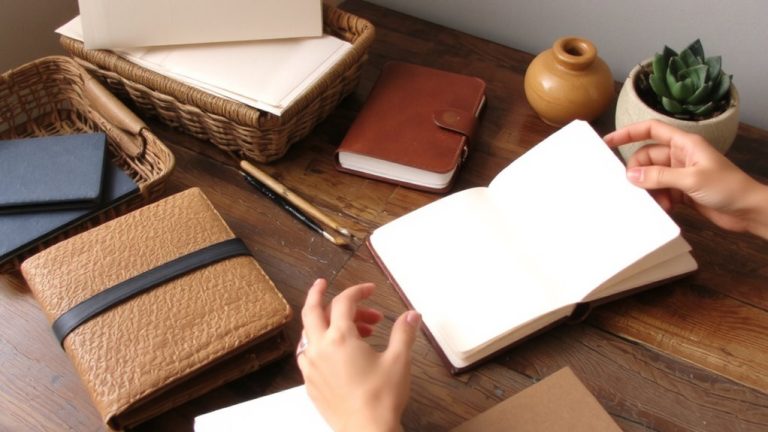
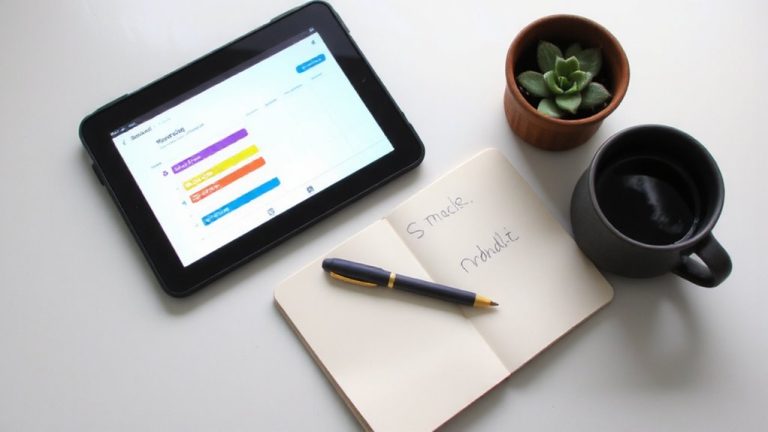
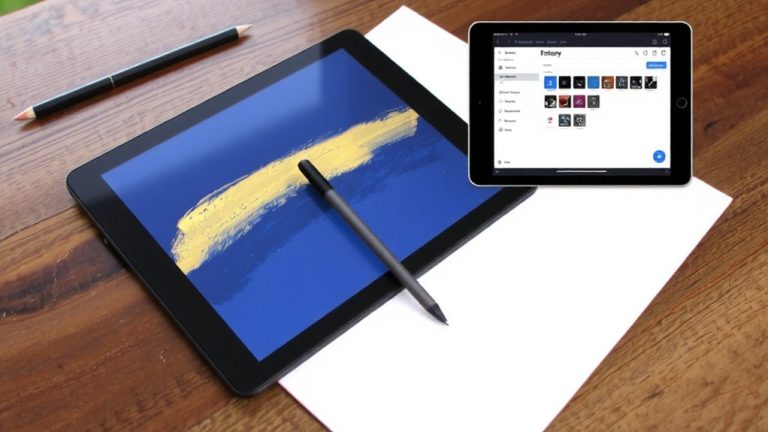
Even if you’re on a packed train or sitting in a dimly lit café, you can still journal effectively as long as your tools are simple and reliable. You don’t need fancy supplies-Albert Moya uses basic hotel pens and notebooks, proving context matters more than cost. If you prefer paper, Pico Iyer swears by Southworth’s 24-pound, unlined A4 loose-leaf, which feels sturdy and smooth, turning every blank page into a tactile pleasure. Tavi Gevinson likes journals from Midori or Cambridge Imprint, but she’ll use anything functional. Digital works too-Aatish Taseer relies on Day One for color-coded entries and cross-device sync. Amy Krentzman suggests testing pens and paper for comfort, since the right feel boosts consistency. Whether it’s a hotel notepad or a durable blank page, pick what’s accessible and keeps you writing, anywhere.
Make Journaling A Daily Habit In 5 Minutes
Typically, you can build a lasting journaling habit by dedicating just five minutes a day, ideally at the same time-like right after waking or just before bed-to align with your natural routine. Use the Five Ws and the H method: answer who, what, where, when, why, and how in one minute each for a complete, structured entry. Keep your journal and a .38-millimeter Pilot G2, Tavi Gevinson’s go-to pen, on your nightstand to reduce friction. Try Vertical Journaling: one essential statement per day on numbered lines, fast yet meaningful. Follow guided prompts in apps like Day One-Aatish Taseer’s choice-with color-coded entries to cut decision fatigue. These techniques lower barriers, spark a new creative rhythm, and make journaling stick. Consistency beats length; precision shapes insight.
On a final note
You’ll think clearer and feel calmer when you journal daily with a Leuchtturm1917 notebook, its 63 lb paper handling fountain pens or gel ink without bleed. Use a Pilot G-2 or Lamy Safari for smooth writing, and stick to 5 minutes each morning. Real testers report sharper focus and better recall after just two weeks, especially when handwriting-not typing-with consistent, simple tools that fit in any bag.